

Morning anxiety, the worry, dread or racing heart that arrives as soon as you wake, usually comes from three overlapping sources: your body’s normal waking stress response, habits that disrupt sleep, and, for some people, a nervous system shaped by trauma.
If you are having thoughts of ending your life or you are in danger, call 911, or call or text 988 now.
Key Takeaways
- A morning stress surge is normal: cortisol rises sharply in the first 30 minutes after waking, and on top of worry it can feel like anxiety.
- Use one skill before your phone: a slow-exhale breath or a short grounding exercise in the first ten minutes can ease symptoms before worry builds.
- Evenings shape mornings: a steady wake time, a screen-free wind-down, and less caffeine and alcohol late in the day can make mornings easier.
- Rule out physical causes: thyroid problems, sleep apnea, medications and substances can all drive morning symptoms, so mention them to your doctor.
- Trauma can keep the body on guard: if you wake up braced for danger or carrying bad dreams into the day, trauma-focused therapy may help more than coping skills alone.
What morning anxiety is, and why it feels worse at the start of the day
Morning anxiety is not a diagnosis on its own. It describes worry, panic, agitation or dread that peaks on waking or in the first hours of the day, and it often shows up alongside an anxiety disorder, depression or trauma-related stress.
If it happens most mornings, the anxiety behind it needs attention too. Reconnect Center’s virtual anxiety treatment focuses on that pattern, with a trauma-first approach delivered by secure video.
The cortisol awakening response
Cortisol, often called the stress hormone, follows a daily rhythm. A review of the awakening cortisol response in the journal Stress reports that in healthy adults, cortisol in saliva rises by between 50% and 160% in the first 30 minutes after waking.
The rise itself is normal and helps you get up and moving. The same review notes links between this morning response and stress, though researchers have not settled exactly how the two connect.
If you go to bed carrying worry, the body’s natural morning surge can land on top of it. A racing heart or a tight stomach in the first minutes of the day can be your body waking up, not a sign that something is wrong.
Common signs of morning anxiety
- Waking with a racing heart, sweating or a tight chest
- Nausea or a knotted stomach, sometimes with no appetite
- Your mind jumping straight to the day’s worries before you are out of bed
- Dread about work, school or one specific task
- Feeling tired and wired at the same time
- Waking earlier than planned and not being able to fall back asleep
Chest pain, fainting, or palpitations that are new or severe need medical attention first. Do not assume they are anxiety until a clinician has checked.
What drives morning anxiety: common contributors
Most morning anxiety has more than one cause. Here are the common ones, what may help, and who to ask about each.
| Contributor | What you may notice | What may help | Who to talk to |
|---|---|---|---|
| Normal cortisol rise on waking | Alertness or a faster heartbeat in the first 30 minutes | Slow breathing, a gentle start, a steady wake time | Usually self-managed; mention it if it feels intense |
| Short or broken sleep | Waking unrefreshed, more irritable and worried | Regular sleep and wake times, a wind-down routine | Primary care clinician or sleep specialist |
| Caffeine | Jitteriness or a faster heartbeat after coffee | A smaller amount, or caffeine after your calming routine | Self-monitoring |
| Alcohol the night before | Restless sleep, early waking, next-day unease | Less alcohol, especially in the evening | Primary care clinician, if cutting back is hard |
| Thyroid problems | Shakiness, heart rate changes, weight or temperature changes | Blood tests your doctor orders | Primary care clinician |
| Sleep apnea | Loud snoring, pauses in breathing, morning headaches, daytime sleepiness | A sleep evaluation | Sleep medicine specialist |
| Medications and substances | Anxiety after stimulants or some prescriptions, or when stopping alcohol or sedatives | A review of everything you take | Your prescriber |
| Trauma-related arousal | Waking on guard, bad dreams, feeling on edge | Trauma-focused therapy | A trauma-informed clinician |
When morning anxiety is connected to trauma
For some people, morning anxiety is about more than the day ahead. It is the body waking up already on guard, as if it has to check for danger before anything else can happen.
The National Institute of Mental Health’s guide to post-traumatic stress disorder lists symptoms that include “feeling tense, on guard, or on edge,” “having difficulty falling asleep or staying asleep,” and “recurring memories or dreams related to the event.” Each of these can be most noticeable at night and in the first moments after waking.
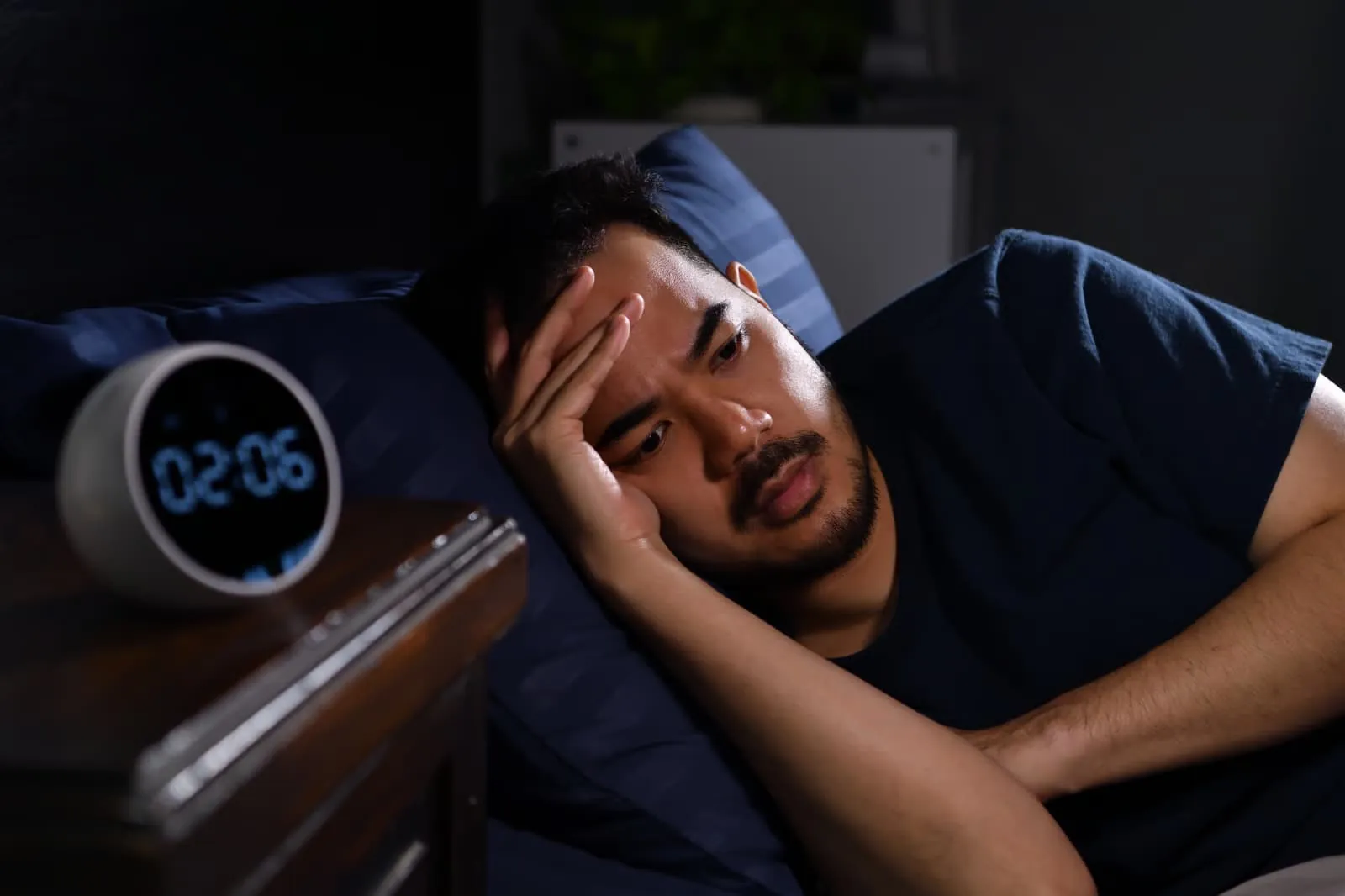
People who have lived through trauma often describe mornings like this:
- Waking suddenly, with a jolt, already alert
- Coming out of a bad dream and carrying its feeling into the day
- Scanning the day for what could go wrong before getting out of bed
- Feeling foggy or far away for a while after waking
- Dreading mornings because they have become hard, which makes the next one harder
The cycle forms here. Anxiety on waking becomes something you brace for, and the bracing keeps your guard up the next morning.
Why coping skills may only get you part of the way
Breathing and grounding skills help in the moment. When morning anxiety comes from trauma, though, the nervous system may keep returning to high alert until what sits underneath is addressed.
Our trauma-focused PTSD treatment online works on that layer. Reconnect Center’s clinicians use approaches such as EMDR (eye movement desensitization and reprocessing), Brainspotting and body-based somatic therapy online, which works directly with physical sensations and your sense of safety.
Trained clinicians deliver these methods as part of a treatment plan, not as self-help exercises. Research on them for morning anxiety specifically is limited, so a trauma specialist can help you decide what fits.
If focusing on body sensations ever makes you feel more overwhelmed or disconnected, stop and return to something simple, like naming what you can see. Tell your therapist, so they can adjust the pace.
Quick techniques for the first ten minutes after waking

Each takes a few minutes and works before you are fully awake. Practice on calmer mornings so they come easily when you need them.
- Longer-exhale breathing: rest one hand on your belly, breathe in through your nose for a count of 4, then out slowly for a count of 6. Repeat for 2 to 3 minutes.
- Box breathing: breathe in for 4, hold for 4, breathe out for 4 and pause for 4. Shorten the counts, or skip the holds, if they feel uncomfortable.
- 5-4-3-2-1 grounding: name 5 things you see, 4 you can touch, 3 you hear, 2 you smell and 1 you taste. Try 3-2-1 if 5 feels like too much.
- Quick muscle release: tense your feet for about 4 seconds, then let go. Work up through your legs, stomach, shoulders and jaw.
- Gentle movement: sit up slowly, roll your neck and shoulders, or take a short walk to let restless energy settle.
If you have a heart or lung condition, check with your doctor before changing how you breathe. For longer-term skills, see worry time and GAD coping skills.
A calmer morning routine
A predictable start gives your nervous system less to react to. Pick two or three of these and repeat them daily.
- Use a softer alarm or a light that brightens gradually, and give yourself a few minutes to sit up before you start moving.
- Drink a glass of water and, when you are ready, eat something with protein and fiber.
- Do one calming practice before you check email, news or social media.
- Build in one thing you value: a warm shower, five minutes outside, stretching or a few lines in a journal.
- Write down the day’s first task, so your mind has a starting point rather than a list of what-ifs.
Evening and sleep habits that set up calmer mornings
Steadier sleep can make mornings easier.
- Keep the same wake time every day, including weekends.
- Wind down for 30 to 60 minutes before bed with low-stimulation activities, such as reading, a warm shower, light stretching or a guided relaxation.
- Keep screens out of reach late in the evening, and avoid checking stressful messages close to bedtime.
- Stop caffeine by early afternoon, and limit heavy meals and alcohol in the hours before sleep.
- Keep your bedroom cool, dark and quiet. Blackout curtains or an eye mask can help if early light wakes you.
- If worries keep you up, write them down earlier in the evening with one next step for each.
Sleep habits usually change mornings gradually rather than overnight. Give a new routine a few weeks before judging whether it is working.
Medical and physical causes worth checking
Some physical problems cause or worsen morning anxiety. Ask your doctor about these:
- Thyroid function: both an overactive and an underactive thyroid can affect mood and anxiety. A primary care clinician can check with a blood test.
- Sleep apnea: loud snoring, pauses in breathing that someone else notices, morning headaches or heavy daytime sleepiness can point to sleep apnea. A sleep specialist can evaluate it, sometimes with a home sleep test.
- Blood sugar: long gaps without food can leave some people shaky or irritable. If you have diabetes or take medication that lowers blood sugar, ask your doctor about overnight lows.
- Medications and substances: stimulants, some prescription medications, caffeine and withdrawal from alcohol or sedatives can all raise anxiety. Never stop or change a medication without talking to the person who prescribes it.
- Heart symptoms: palpitations, chest discomfort or fainting should be checked promptly.
When you see your doctor, describe what happens and when: what time you wake, how you feel in the first hour, and anything that makes it better or worse. Those details help them decide which tests, if any, you need.
Managing morning anxiety before work or school
If mornings are your hardest time, these steps can lower the pressure before work or class.
- Prepare the night before: clothes, bag and the first task written down.
- Leave a small time buffer, so you are not rushing on top of feeling anxious.
- Save one quick technique for the moment you arrive, such as two minutes of longer-exhale breathing.
- If anxiety is affecting attendance or performance, ask HR or your school’s disability services about their accommodation process. Options may include flexible start times, remote work or adjusted deadlines while you are in treatment.
A clinician can often provide documentation to support an accommodation request. For questions about your legal rights, an employee assistance program (EAP) or an employment-law resource can explain your options.
When to seek professional help
Coping skills help, but they do not replace treatment. Talk with a clinician if:
- Morning anxiety happens most days and is not easing with the steps above
- It keeps you from work, school, relationships or caring for yourself or others
- You are avoiding leaving the house or starting the day
- Panic attacks are becoming frequent, including ones that wake you from sleep
- You are using alcohol or other substances to get through the morning
- Bad dreams, flashbacks or feeling constantly on guard are part of the picture
If you have thoughts of harming yourself or someone else, call or text 988, or call 911 if you are in immediate danger. For chest pain or fainting, call 911.
Therapy and medication
Therapy is a core treatment for anxiety, and medication can be part of care for some people. A primary care clinician or psychiatrist can talk through medication options with you.
At Reconnect Center, our clinicians focus on therapy. If you take medication for anxiety, that stays between you and your prescriber, and we work alongside it.
Levels of care at Reconnect Center
Reconnect Center provides trauma-focused care entirely by secure telehealth video. There is no in-person option, and our programs are available to adults located in California.
Treatment plans are built on the RITTM trauma treatment model, the Reconnect Integrative Trauma Treatment Model developed by founder Dr. Karol Darsa. Which level of care fits is a clinical decision made at your assessment.
Many people start with one-on-one virtual outpatient therapy. Our Virtual Intensive Outpatient Program (IOP) adds structure while you keep working, and the Virtual Partial Hospitalization Program (PHP) offers the most support.
| Virtual Outpatient | Virtual IOP | Virtual PHP | |
|---|---|---|---|
| Time commitment | Sessions scheduled around work, school and family | 9 to 15 hours a week | 5 days a week, 5 hours a day |
| What it includes | Individual therapy with group therapy options | Individual therapy, group therapy and skills work | Individual therapy, daily groups and psychoeducation |
| Often a fit for | Ongoing support, or stepping down from a more intensive program | More support than weekly therapy while keeping work and home life | The most structure, including stepping down from inpatient care |
| Where it happens | Secure video, from home | Secure video, from home | Secure video, from home |
| Who it serves | Adults located in California | Adults located in California | Adults located in California |
Frequently asked questions about morning anxiety
Why is my anxiety worse in the morning?
Cortisol naturally rises in the first 30 minutes after waking. Add short sleep, caffeine, anticipation of the day or a nervous system that stays on guard after trauma, and that normal surge can feel like anxiety.
How do I stop waking up with anxiety?
Work on both ends of the night: a steady wake time and a calm wind-down in the evening, then one short breathing or grounding skill in the first ten minutes. If morning anxiety continues for weeks or affects your days, talk with a clinician about what is driving it.
Is it normal to wake up with anxiety and nausea?
Many people with morning anxiety notice a knotted or queasy stomach on waking. If nausea is frequent, severe or comes with other symptoms, see a doctor to rule out physical causes.
Can caffeine make morning anxiety worse?
Yes, for some people. Caffeine stimulates the nervous system and can raise heart rate and jitteriness. Try a smaller amount, or wait until after your calming routine, and notice what changes.
Can alcohol the night before make morning anxiety worse?
It can. Alcohol may help you fall asleep but tends to disrupt sleep later in the night, which can leave you restless and uneasy the next morning. Cutting back in the evening may help.
Does exercising in the morning help or hurt morning anxiety?
Regular activity tends to help with anxiety overall. Intense morning workouts raise heart rate, which some people find unsettling early in the day, so start with light movement and notice how you respond.
Are sleep or meditation apps helpful for morning anxiety?
They can be useful for practicing relaxation and building a wind-down habit, especially when used consistently. They work best as a supplement to care, not a replacement, when symptoms are significant.
What is the 3-3-3 rule for anxiety?
It is a quick grounding exercise: name three things you see, three sounds you hear, and move three parts of your body. It can bring your attention back to the present quickly.
Start your mornings with more support
Morning anxiety is common and treatable. If it is tied to trauma or shaping your days, talk with our team.
Book a confidential consultation or verify your insurance. Insurance verification is confidential and creates no obligation to enroll.
Call (310) 307-0020. All communications are confidential.
This content is for informational purposes only and is not a substitute for professional medical advice, diagnosis or treatment. Always consult a qualified healthcare provider about your situation. If you are in crisis, call or text the Suicide & Crisis Lifeline at 988.